TL;DR: Wondering why your pug pants so much? Pugs pant more than most breeds because the flat, short-muzzled face makes panting an inefficient way to shed heat. Panting after play or in warmth is normal, but noisy breathing at rest, blue or gray gums, gagging, or collapse points to a brachycephalic airway problem and needs a vet.
Key takeaways
- A pug's short muzzle gives little surface area to cool air, so the dog pants harder for less effect.
- Brachycephalic airway syndrome makes some pugs breathe noisily even at rest.
- Pugs overheat fast and tolerate heat and humidity poorly.
- Loud panting with blue gums, retching, or collapse is an emergency.
Pugs are famously noisy breathers — the snorts and snuffles are part of the charm. That same flat face shortens the airway, so a pug pants and breathes harder than a longer-nosed dog of the same size.
The challenge is separating the normal pug soundtrack from panting that signals a breathing problem. Understanding the brachycephalic airway helps you act before a warm day becomes dangerous.
Track your pug's panting before the vet visit
PetStory lets you log when your pug pants, how noisy the breathing is, and what triggered it. A week of notes helps a vet decide between airway surgery and simple heat and weight management.
Related reading
- Dog sleep guide: cycles, positions, routines, and warning signs - Part of the dog sleep and daily rhythm guide cluster.
- Why does my husky pant so much? - Part of the dog sleep and daily rhythm guide cluster.
- Why does my Labrador pant so much? - Part of the dog sleep and daily rhythm guide cluster.
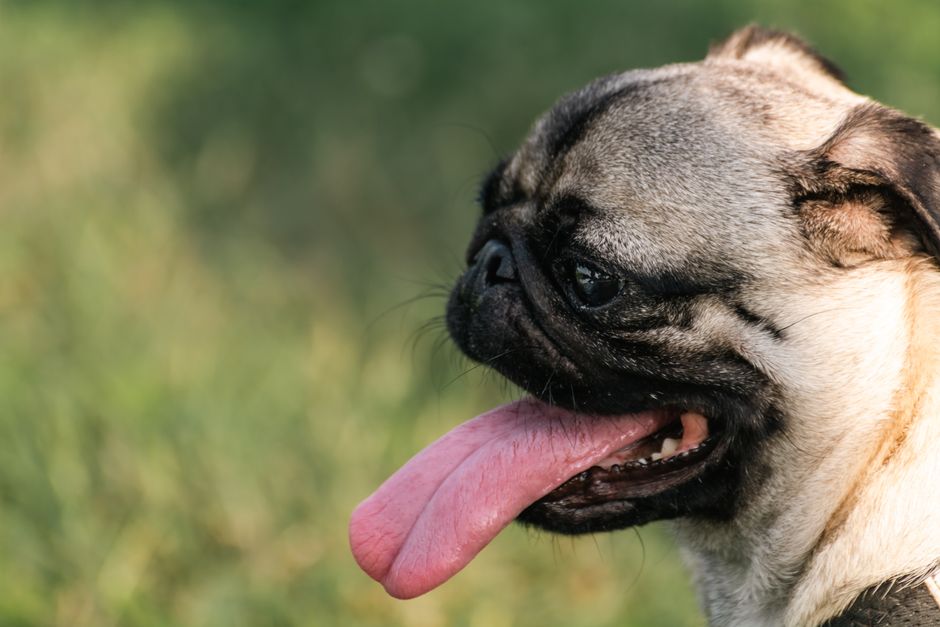
Why does my pug pant so much? The short answer
Direct answer: Pugs pant a lot because the short, flat muzzle gives the airway very little surface area to cool incoming air, so each breath moves less heat than it would in a long-nosed dog. Pugs also overheat quickly. Most panting is normal, but noisy breathing at rest, blue or gray gums, gagging, or collapse signals a brachycephalic airway problem and needs a vet.
The ASPCA dog care guide notes that dogs cool down chiefly by panting, using evaporation from the tongue and the lining of the airway. Longer, more open nasal passages do that job far more effectively.
A pug has almost none of that runway. The muzzle is compressed into a small skull, the nostrils are often pinched, and the soft palate tends to be too long for the shortened head. To get the same cooling, the pug has to move more air faster — which reads as near-constant panting.
Action checklist
- Short muzzle: minimal nasal surface area to cool air.
- Stenotic (narrow) nostrils: many pugs breathe through a small opening.
- Overlong soft palate: extra tissue crowds the back of the throat.
- Low heat tolerance: pugs warm up far faster than they cool down.
Practical takeaway
The flat face is the core reason — panting simply works poorly in a pug.
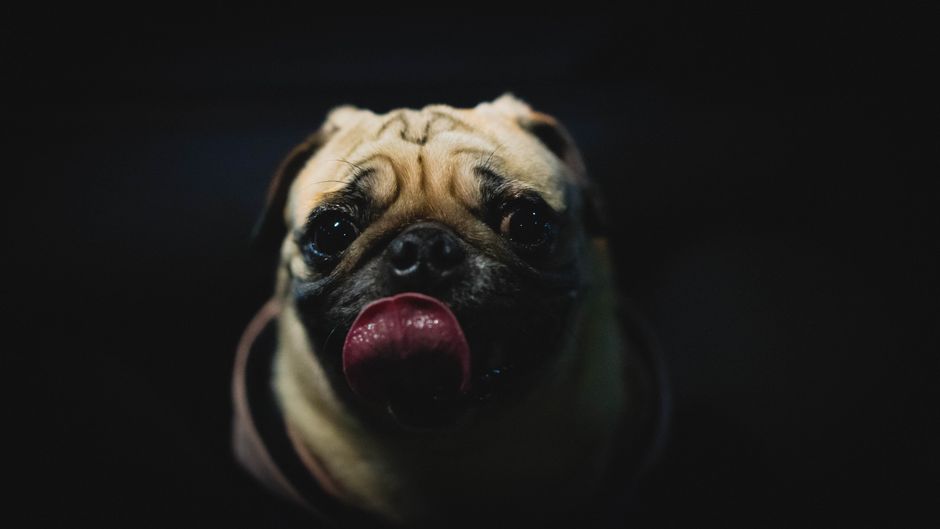
Cause 1: Brachycephalic airway syndrome (BOAS)
Brachycephalic obstructive airway syndrome describes the breathing limits built into flat-faced breeds, and pugs are among the most affected. It can include pinched nostrils, an overlong soft palate, a narrowed windpipe, and small laryngeal pouches that get drawn inward with each forceful breath. The more of these a pug has, the more it pants and the louder it sounds.
A pug with mild BOAS may snore and pant after exertion and otherwise do fine. A pug with moderate or severe BOAS pants noisily at rest, tires fast, and may gag when eating or excited. Surgery to open the nostrils and shorten the soft palate is common and often dramatically improves quality of life.
Action checklist
- Noisy breathing at rest suggests BOAS beyond the mild range.
- Gagging or trouble swallowing points to soft-palate involvement.
- Quitting walks early signals exercise intolerance.
- Ask a vet about a BOAS grading if panting is loud and constant.
Practical takeaway
Loud panting at rest is a medical signal in a pug, not just breed personality.
Cause 2: Heat and humidity
Because panting cools a pug so poorly, heat is the breed's greatest threat. Temperatures a sporting dog ignores can move a pug toward heatstroke within minutes. Panting that turns frantic, with heavy drool or a bright red tongue, is an early sign the dog is losing the cooling battle.
Humidity makes it worse, because evaporation stalls when the air is already damp. On warm or sticky days keep walks short and early, avoid midday sun, never leave a pug in a car or hot room, and watch for panting that intensifies rather than easing once the dog rests in shade.
Action checklist
- Treat 75°F and up as a caution zone, lower with humidity.
- Exercise early morning or after sunset in summer.
- Never leave a pug in a parked car, even for a minute.
- Frantic panting, bright red gums, or wobbliness is a heat emergency — cool with room-temperature water and see a vet.
Practical takeaway
Pugs overheat at temperatures most dogs handle easily — manage heat first.
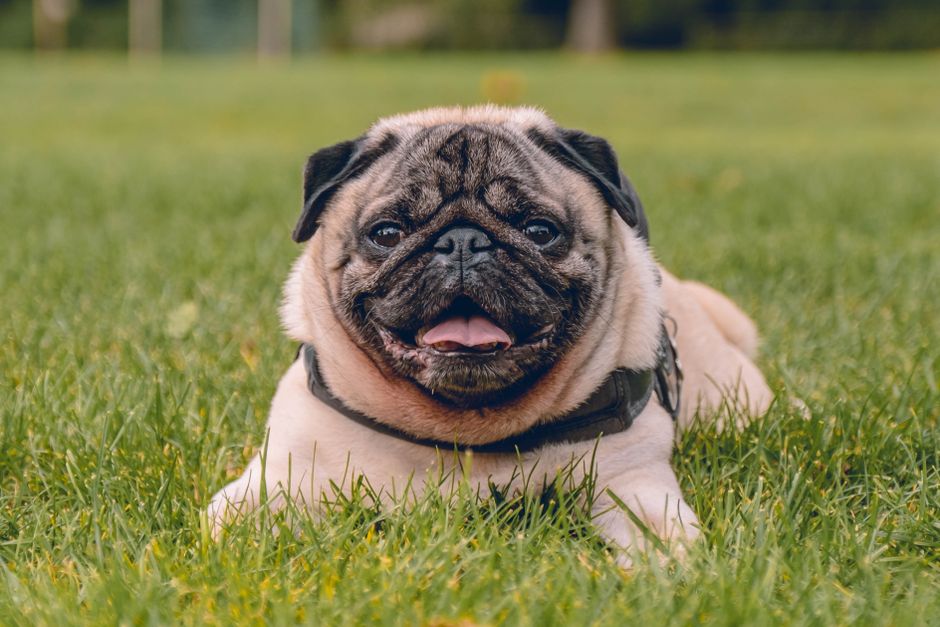
Cause 2: Weight, excitement, and stress
Pugs love food and love people, and both traits feed into panting. Excitement during greetings, play, and car rides triggers panting that is usually brief, but it stacks on top of an already limited airway, so a pug huffs more than a longer-nosed dog doing the same thing.
Weight is the factor owners can most control. Pugs gain weight easily, and fat around the chest and neck further crowds the airway, so even a couple of extra pounds noticeably increases panting. Keeping a pug lean is one of the most effective ways to reduce everyday breathing effort.
Action checklist
- Excited panting during greetings and play is normal if it settles quickly.
- Anxiety panting often comes with pacing, lip licking, or clinginess.
- Extra weight crowds the airway — you should feel the ribs without pressing hard.
- Use a harness, not a neck collar, to avoid pressure on the windpipe.
Practical takeaway
You cannot change the muzzle, but lean weight and calm routines ease the panting you can control.
When to see a vet
Most pug panting is just the breed's normal soundtrack, but some patterns need a professional. Call a vet for noisy breathing at rest, panting with blue, gray, or very pale gums, repeated gagging or retching, fainting or collapse during activity, or a sudden rise in panting with no heat or exercise behind it.
For a pug that labors year-round, a vet can grade the airway and discuss whether opening the nostrils or trimming the soft palate would help. Identifying severe BOAS before heat or exertion triggers a crisis is far safer than reacting to an emergency.
Action checklist
- Noisy breathing at rest: ask for a BOAS assessment.
- Blue, gray, or pale gums: emergency — low oxygen.
- Collapse on a walk: stop, cool the dog, and get to a vet.
- New resting panting with no clear trigger: book a check-up.
Practical takeaway
With a flat-faced breed, choose the early vet visit — airway problems escalate fast.