TL;DR: German shepherds pant more than many breeds because of a thick double coat, high working drive, and a sensitive, alert temperament that responds physically to stress. Panting during exercise or in warmth is normal. Panting at rest in a cool room, with pale or blue gums or lethargy, needs a vet check.
Key takeaways
- A German shepherd's dense double coat traps heat and raises the panting baseline.
- High working drive means long, normal panting after exercise.
- The breed's alert, sensitive temperament makes anxiety panting common.
- Panting at rest with pale or blue gums, or a sudden change, needs a vet.
German shepherds are working dogs to the core — alert, driven, and physically capable. That combination of a heavy double coat and a high-output body means a shepherd pants more than many breeds just going about a normal day.
Their sensitive, watchful temperament adds another layer, because stress and alertness show up as panting too. Knowing the main causes helps you tell ordinary shepherd panting from a sign worth acting on.
Log your shepherd's panting before the vet visit
PetStory lets you record when your German shepherd pants, for how long, and what happened first. A week of notes turns a vague symptom into something a vet can actually use.
Related reading
- Dog sleep guide: cycles, positions, routines, and warning signs - Part of the dog sleep and daily rhythm guide cluster.
- Why does my dog sigh? - Part of the dog sleep and daily rhythm guide cluster.
- Why does my dog sploot? - Part of the dog sleep and daily rhythm guide cluster.
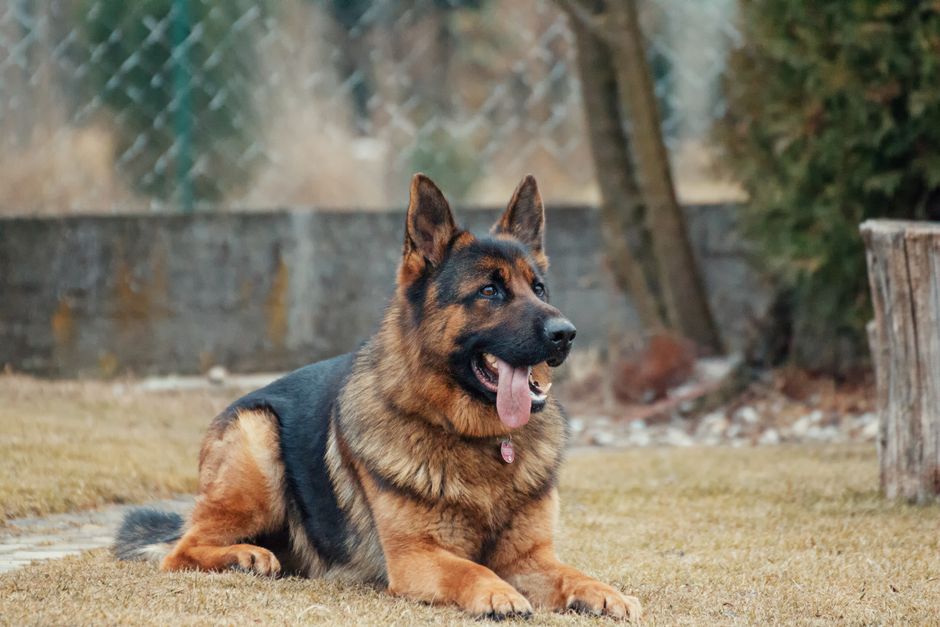
Why does my German shepherd pant so much? The short answer
Direct answer: German shepherds pant a lot because of a thick double coat that traps heat, a high working drive that produces a lot of body heat, and an alert, sensitive temperament that responds to stress with panting. Most of it is normal. Panting at rest in a cool room, with pale or blue gums or lethargy, is the sign that needs a vet.
The ASPCA dog care guide explains that dogs cool themselves chiefly by panting, releasing heat through evaporation from the tongue and airway rather than sweating through the skin. More insulation and more activity both mean more panting.
German shepherds carry plenty of both. The breed's dense double coat holds body heat well, and the working-line drive produces a dog that generates heat readily. Layer on a temperament wired for vigilance, and panting becomes a frequent part of the picture.
Action checklist
- Double coat: a dense undercoat and guard coat trap heat.
- High drive: shepherds are athletic working dogs with real stamina.
- Sensitive temperament: alertness and stress trigger panting.
- Age and weight: older joints or extra pounds raise the baseline.
Practical takeaway
Panting context — not just volume — is the most useful clue in a shepherd.
Cause 1: The double coat
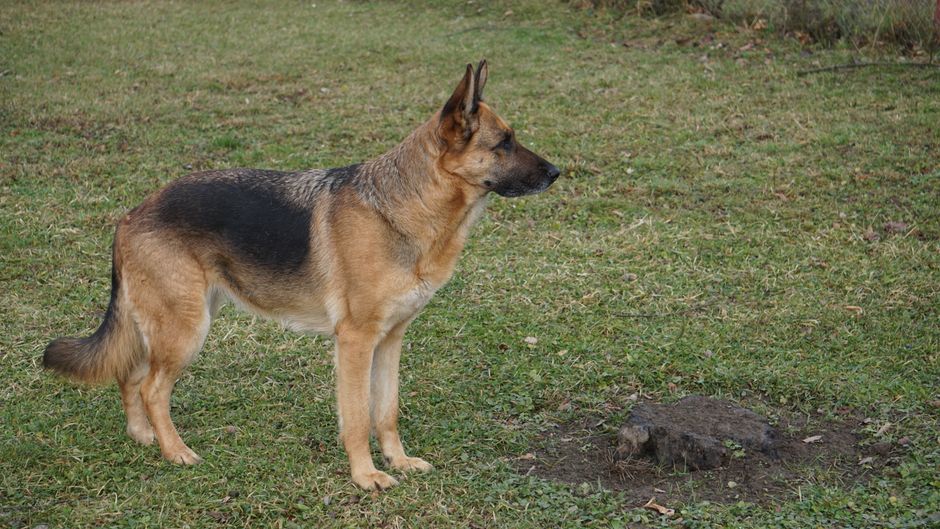
A German shepherd's double coat pairs a soft, dense undercoat with a coarser outer coat. It insulates well in cold and wet conditions and acts like a thermal layer in warm ones. Because the dog cannot sweat through that coat, panting is the main way it sheds heat.
This is why a shepherd may pant on a mild day that leaves a short-coated dog comfortable. The temperature against the skin is always warmer than the surrounding air. Brushing out the undercoat regularly, especially during the twice-a-year shed, cuts how hard the dog has to work to cool down. Avoid shaving — the coat also protects skin and aids temperature regulation.
Action checklist
- Brush the undercoat several times a week during seasonal shedding.
- Do not shave — the coat protects against sun and helps temperature control.
- Provide shade and constant water access outdoors.
- Walk in the early morning or evening during warm months.
Practical takeaway
The coat is a major reason shepherds pant more than short-coated breeds.
Cause 2: Exercise drive and recovery
German shepherds are high-energy working dogs that typically need one to two hours of real activity a day. During and after that exercise, 10 to 20 minutes of sustained panting is normal, even in cool weather, as the dog releases built-up heat.
The concern is panting that will not settle after a reasonable cool-down. If your shepherd is still breathing hard 30 to 40 minutes after a session, the activity may have been too long for the conditions, the dog may be overweight, or there may be an underlying heart or respiratory issue that a vet should check.
Action checklist
- Expect 10 to 20 minutes of heavy panting after moderate exercise.
- Offer water after exercise, not during intense activity.
- Above 80°F, shorten outdoor sessions significantly.
- Hot pavement adds ground-level heat — walk on grass when you can.
Practical takeaway
Panting after exercise is normal; panting that never resolves is not.
Cause 3: Anxiety and an alert temperament
German shepherds are bred to watch, guard, and respond, and that vigilance has a physical side. A shepherd that pants during thunderstorms, at the vet, around strangers, in the car, or when left alone is often experiencing anxiety or heightened alertness rather than a physical problem.
This kind of panting usually tracks the trigger and eases when the dog feels safe again. It often comes with other stress signals — pacing, whining, lip licking, a tucked posture, or clinginess. Because shepherds are prone to anxiety, including separation anxiety, recognizing the pattern matters: the answer is behavioral support, not a medical workup.
Action checklist
- Storms, vet visits, strangers, and being left alone are common triggers.
- Anxiety panting often comes with pacing, whining, or a tucked posture.
- Separation anxiety is common in the breed and a frequent panting cause.
- Predictable, situational panting points to behavior, not illness.
Practical takeaway
A shepherd's alert temperament makes anxiety one of the most common panting triggers.
When to see a vet
Most German shepherd panting is normal, but some patterns need a vet: panting at rest in a cool, comfortable room with no obvious cause; panting with pale, blue, or bright red gums; sudden heavy panting without exercise, heat, or stress; panting with a swollen or distended abdomen; or any new pattern in a senior shepherd.
Because the breed is prone to bloat, restless panting paired with a swollen belly and unproductive retching is an emergency that needs immediate care. Senior shepherds that pant more should also be checked for arthritis pain, heart disease, and hormonal conditions.
Action checklist
- Panting at rest in a cool room: could be pain, cardiac, or hormonal.
- Swollen belly with restless panting and retching: possible bloat — emergency.
- Rapid or labored breathing with abnormal gum color: emergency.
- Increased panting in a senior shepherd: ask about pain and heart checks.
Practical takeaway
Any panting that does not fit coat, heat, exercise, or anxiety should be evaluated quickly.