TL;DR: Why does my husky talk so much? Huskies were bred to work in close packs, and they kept the wolf-style howling, grumbling, and "woo-woo" sounds most breeds lost. Talking is how a husky greets you, protests, demands attention, and burns social energy, and in a healthy dog it is normal. New whining with pacing, hiding, or appetite loss is the version that needs a vet.
Key takeaways
- Huskies talk because pack-working sled dogs kept howl-based communication most breeds lost.
- The classic "woo-woo" is social: greeting, protest, and conversation, not aggression or distress.
- Talking increases when a husky is under-exercised or has learned that noise gets attention.
- New or changed vocalizing with pacing, hiding, or appetite loss deserves a vet check.
If your husky woo-woos back when you speak, grumbles at bath time, and howls along with sirens, you own a normal husky. The breed is famous for talking, and first-time owners are often startled by how loud, varied, and opinionated those sounds are compared with ordinary barking.
Understanding why the breed talks — and what your individual dog is saying — makes the noise easier to live with and easier to manage. It also helps you spot the rare case where vocalizing signals pain or anxiety instead of personality.
Log your husky's talking before you try to change it
PetStory lets you record when your husky talks, what triggered it, and how you responded. A week of notes shows whether the noise is greeting, demand, or boredom — and gives a vet or trainer a real pattern to work with.
Related reading
- Signs of anxiety in dogs: how to recognize them early - Part of the dog anxiety, attachment, and reactivity guide cluster.
- Why does my dog follow me everywhere? - Part of the dog anxiety, attachment, and reactivity guide cluster.
- why does my dog lean on me? - Part of the dog anxiety, attachment, and reactivity guide cluster.
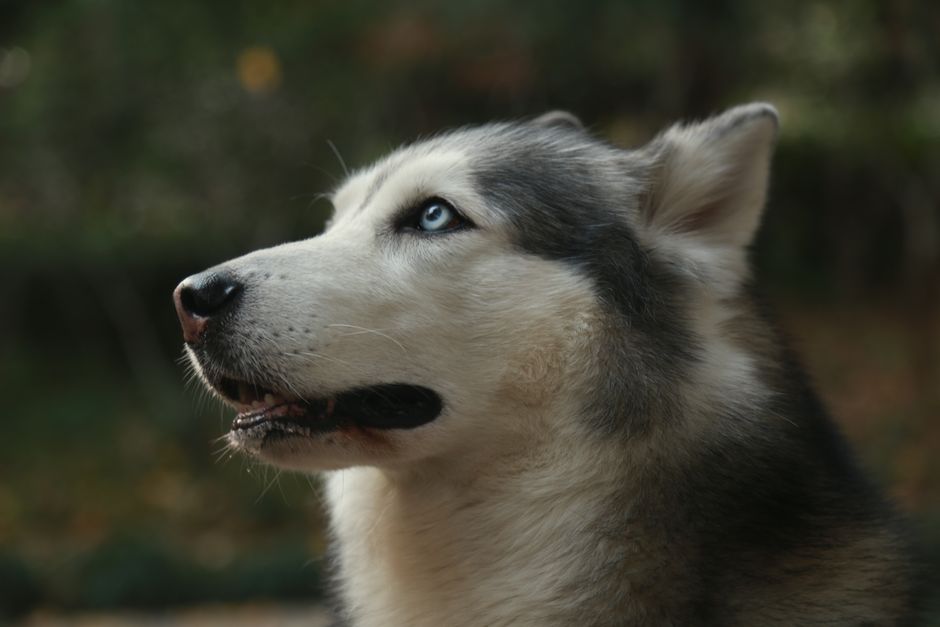
Why does my husky talk so much? The short answer
Direct answer: Huskies talk so much because they were bred to work in close-knit sled teams and kept the howl-based communication of their ancestors. Howling, grumbling, and "woo-woo" sounds carry farther and say more than barks, so huskies use them to greet, protest, and demand attention. In a healthy husky, heavy talking is normal breed behavior.
The AKC Siberian husky breed profile describes the breed as born pack dogs, developed by the Chukchi people to pull sleds in teams across long distances. Dogs that live and work that closely need constant communication, and the husky kept a full vocal range where most companion breeds narrowed down to barking.
That is why husky noise sounds like conversation. The pitch rises and falls, the dog watches your face, and the sounds change with context: one voice for your arrival home, another for a delayed dinner, another for the vacuum. Before you treat the talking as a problem, it helps to know which of the causes below is doing the talking.
Action checklist
- Sled-team ancestry wired the breed for constant vocal communication.
- Howl-type sounds carry farther and vary more than barks.
- Talking is social by default: greeting, protest, and commentary.
- Excessive or new vocalizing usually traces to energy, learning, or discomfort.
Practical takeaway
Talking is standard equipment on a husky — the question is what your dog is using it for.
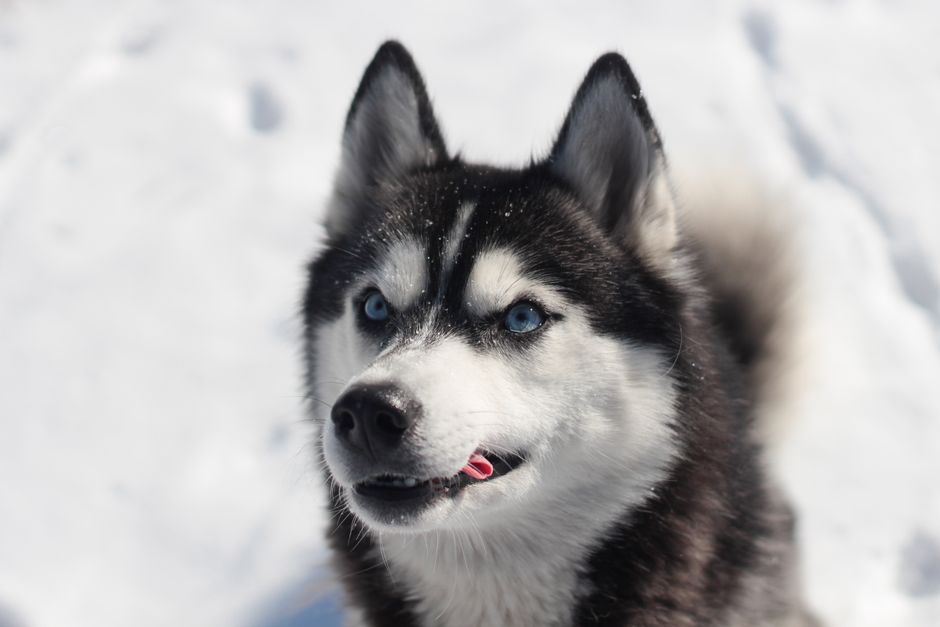
Cause 1: Why do huskies talk instead of barking?
Huskies bark less than most breeds and howl-talk more, and the difference is ancestry. Howls travel far across open terrain and can be sustained and modulated, which suited dogs spread along a sled line; barks are short-range alarm sounds. As the AKC explainer on why dogs howl notes, howling is ancient communication for announcing location and rallying the group — and huskies simply never stopped using it.
The famous "woo-woo" is a softened, social version of that howl, and many huskies learn to shape it into something eerily speech-like because owners react so warmly when they do. Sirens, harmonicas, and other high sustained tones often set off a full howl: your husky is answering what its ears process as another howl, not crying about the sound.
Action checklist
- Howls are long-distance pack communication; barks are short-range alarms.
- The "woo-woo" is a social, conversational form of the howl.
- Sirens and sustained tones trigger answering howls, not distress.
- Husky talk is rarely aggressive — the body stays loose and the tail relaxed.
Practical takeaway
Your husky talks instead of barking because it kept the long-range pack voice its ancestors used.
Cause 2: Husky talking as a learned attention habit
Huskies are quick to learn what works. If woo-wooing at the treat cupboard earns a treat, or grumbling during a phone call gets you to look over and laugh, the behavior gets repeated with more confidence. Most adult huskies that "argue" about nail trims, dinner times, and ended play sessions rehearsed the routine for years, one reinforced conversation at a time. Filming it for friends reinforces it too — the dog reads the attention loud and clear.
You do not need to eliminate the talking, just decide what it should earn. Respond warmly to greeting talk if you enjoy it, but make demand-talking useless: wait for four or five seconds of quiet before the food bowl drops or the leash goes on. In an apartment or shared building, teaching a "quiet" cue and rewarding calm settles matters more than any correction, because scolding is still attention to a husky.
Action checklist
- Talking that earns food, laughter, or attention gets repeated.
- Demand-talking fades when quiet, not noise, unlocks the good thing.
- Reward a few seconds of silence before meals, walks, and play.
- Scolding counts as attention — a calm ignore works better than a reaction.
Practical takeaway
Huskies keep talking because it works; change what the noise earns and the volume follows.
Cause 3: Pent-up energy and boredom
A husky was built to run for hours, and a mind and body with nowhere to put that drive will vent it through the voice. Under-exercised huskies grumble, howl at nothing obvious, and pace the house looking for a job, often alongside digging and destructive chewing. Frantic bursts of noise-plus-sprinting are close cousins of the zoomies — pressure escaping the only way available.
The fix is unglamorous: more real exercise and more mental work. Most adult huskies need well over an hour of hard activity a day — running, pulling sports, long sniff-heavy hikes — plus puzzle feeders or training sessions to tire the brain. Owners are consistently surprised how much of the "excessive" talking disappears in a husky that finishes the day genuinely tired.
Action checklist
- An under-exercised husky vents energy through howling and grumbling.
- Noise paired with pacing, digging, or chewing points to boredom.
- Plan an hour or more of hard daily exercise for an adult husky.
- Puzzle feeders and training tire the brain and quiet the voice.
Practical takeaway
A talkative husky that is also restless or destructive is asking for exercise, not a hushing.
When husky talking needs a vet
The talking itself almost never does — it is the change that matters. A husky that starts vocalizing far more than its own normal, whines or yelps when touched, lying down, or climbing stairs, or howls persistently when left alone may be signaling pain or separation anxiety rather than personality. Sudden heavy vocalizing in a senior husky is also a known flag for cognitive decline, especially at night.
Compare against your dog's baseline, not the breed's reputation. New whining with a hunched posture, hiding, appetite loss, or restlessness earns a vet visit; the overlap with a dog crying or whimpering is worth reading if the sound has shifted from social woo-woos toward distress notes. Alone-time howling with destruction or house soiling points to separation anxiety, which a vet or behaviorist can treat far better than a bark collar ever will.
Action checklist
- A sudden rise above your dog's own vocal baseline deserves attention.
- Yelping or whining on touch or movement suggests pain — book a vet.
- Howling only when alone, with destruction, points to separation anxiety.
- New night vocalizing in a senior husky can signal cognitive decline.
Practical takeaway
Judge the change, not the volume: a husky that talks differently is saying something new.